
Foundation repair warning signs are easy to miss in the early stages — and in Tulsa’s clay soil environment, that is precisely when catching them matters most. Oklahoma’s expansive soils move year-round, and the damage they cause to residential foundations accumulates gradually before it becomes dramatic. By the time a Tulsa homeowner sees a wall that is visibly bowing inward or a floor that has dropped an inch on one side, the repair scope — and the repair cost — has already grown significantly beyond what an earlier intervention would have required. This guide covers every major warning sign that Tulsa homeowners should know, what each one indicates structurally, and when to call for a professional assessment.
Cracks in Walls and Floors
Wall and floor cracks are the most visible and most misread foundation warning signs. Not all cracks are structural emergencies, but none of them should be dismissed without understanding what type of crack it is and what caused it.
Horizontal cracks in basement walls are the most serious crack type. They form when lateral soil pressure — the outward push of saturated clay soil against the wall — exceeds the wall’s design capacity. A horizontal crack running across the middle third of a concrete block wall indicates that the wall is beginning to bow inward and that the soil pressure driving that movement has not diminished. Horizontal cracks require immediate professional assessment. Left unaddressed, they progress from a stabilization job to a wall rebuild.
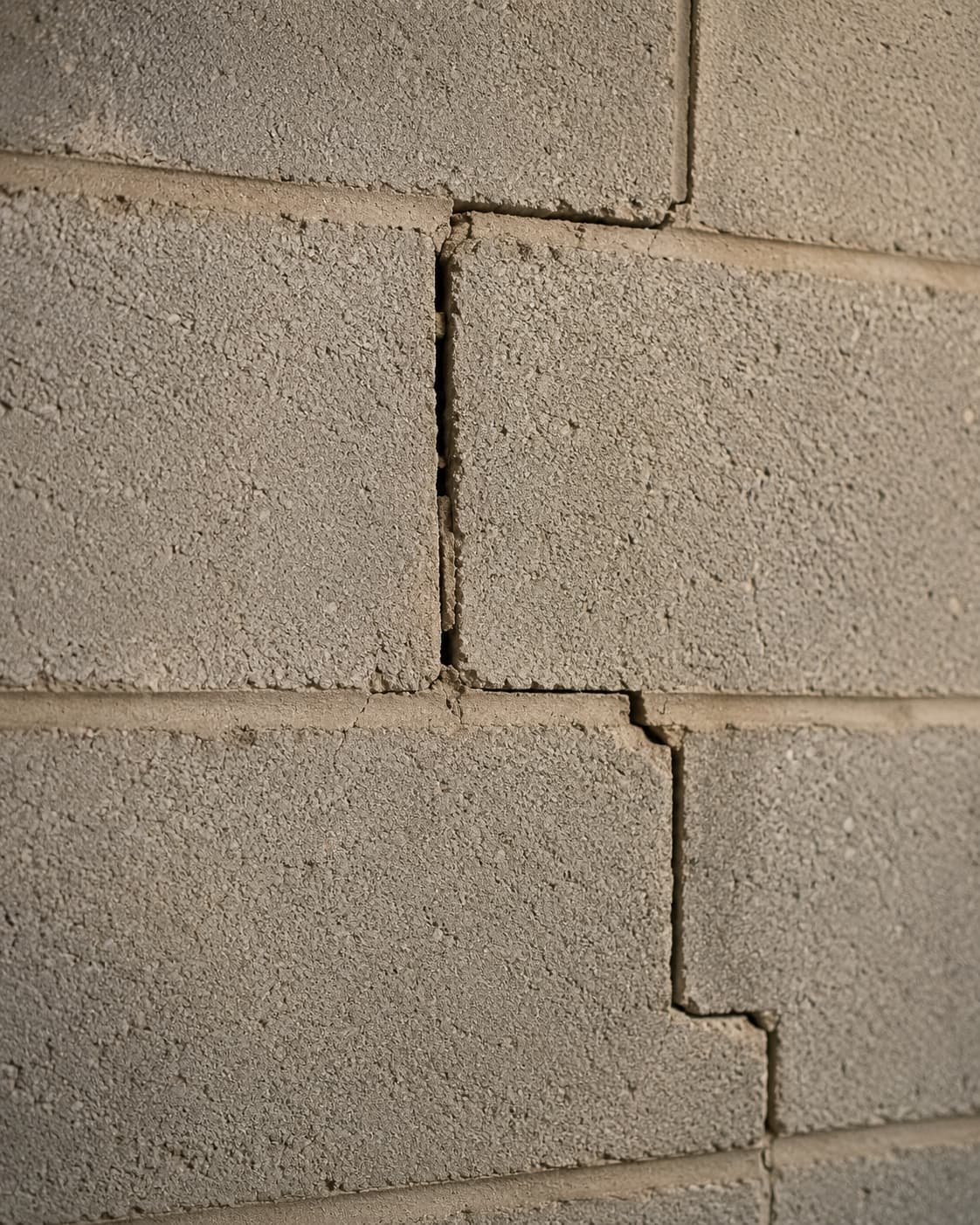
Stair-step cracks along the mortar joints of concrete block walls indicate differential settlement — one section of the foundation is moving at a different rate than the adjacent section. The crack follows the mortar joints because that is the weakest path through the wall. Stair-step cracks are structural and should be professionally evaluated, particularly if the crack is widening over time or if one side of the crack is higher than the other, which indicates active vertical movement.
Diagonal cracks radiating from the corners of window and door openings in poured concrete walls are a reliable indicator of differential settlement. The corners of openings are stress concentration points — when the foundation beneath them settles unevenly, the crack propagates diagonally from the corner. A single narrow diagonal crack that has been stable for years may be a historical shrinkage event. A crack that is widening, or that is accompanied by the door or window in that opening beginning to stick, is active and warrants assessment.
Vertical hairline cracks in poured concrete walls are typically shrinkage cracks from the concrete curing process and are usually cosmetic. However, a vertical crack that is wider at the top than the bottom, or that shows water infiltration, has moved beyond cosmetic and requires professional evaluation.
Doors and Windows That Stick or No Longer Close Properly
When a door that used to swing freely begins to stick, drag along the floor, or fail to latch without force, the frame around it has changed shape. Door frames are rectangular — they only work correctly when the structure around them maintains its original geometry. Foundation settlement or wall movement distorts that geometry, and the door binding is the visible symptom of the structural change below.
Interior doors sticking at the top corner on the latch side is one of the most common presentations of foundation settlement in Tulsa homes. The diagonal distortion of the frame that causes this pattern — racking, in structural terms — is produced by differential settlement beneath one corner or side of the structure. Windows that develop gaps at one corner, or that begin to crack at the corners of the glass, are showing the same distortion in a different material.
Garage doors that develop visible gaps at one corner when closed, or that begin to bind against the track on one side, are also reliable foundation movement indicators — particularly in homes where the garage slab is on a separate footing from the main foundation and has settled independently.
Uneven, Sloping, or Bouncy Floors
A floor that was level at construction and has developed a noticeable slope toward one side of a room is showing the effects of differential foundation settlement. In Tulsa homes with slab-on-grade foundations, this typically indicates that the clay soil beneath one section of the slab has shrunk or consolidated more than the adjacent section. In pier and beam homes — common in Tulsa’s older established neighbourhoods — a sloping floor usually indicates that one or more of the support piers beneath the floor system has settled, deteriorated, or shifted.
Floors that feel springy or bouncy underfoot in a pier and beam home are indicating that the structural members — the beams and joists — between the piers have weakened, typically through wood rot or fungal deterioration driven by crawl space moisture. This is a different problem from settlement but equally serious, and equally addressable with the right repair approach.
A useful self-check for Tulsa homeowners is to place a marble or a small ball bearing on the floor in several rooms and observe whether it rolls consistently toward one direction. Consistent rolling toward the same corner across multiple rooms is a reliable indicator of real structural settlement rather than normal floor variation.
Gaps Between Walls, Ceilings, and Floors
Gaps forming between interior walls and the ceiling above them, or between baseboards and the floor below them, indicate that the structure is moving in ways that are pulling these elements apart. In a settling foundation, the affected section of the structure drops while the adjacent sections remain in place — the gap at the ceiling or floor marks the boundary of the movement zone.
Exterior gaps are equally informative. A gap forming between the brick veneer and the window or door frames it surrounds, or between the chimney and the main house structure, indicates differential movement between structural elements that were originally in contact. Chimney separation — where the chimney visibly leans away from the house or develops a gap at the roofline — is a serious structural warning sign that warrants immediate assessment.
Water Infiltration and Moisture in the Basement or Crawl Space
Water appearing in a basement after heavy rain, efflorescence staining on block walls, or a persistent musty odour from the crawl space are all indicators of moisture infiltration that has foundation implications beyond the water damage itself. Chronic moisture against a foundation wall accelerates deterioration of mortar joints, corrodes steel reinforcement, and increases hydrostatic pressure that drives wall movement. A wet basement in Tulsa is rarely just a waterproofing problem — it is frequently a warning sign that the wall is under sustained pressure that will eventually cause structural movement if the water source is not managed.
Crawl space moisture presents differently but carries the same structural risk. A crawl space that smells musty, shows visible mould or fungal growth on the floor joists, or has standing water after rain events is creating the conditions for wood rot and pier deterioration that will eventually produce the sloping floors and sticking doors described above.
When to Call for a Professional Assessment
Any single warning sign from this list warrants a professional inspection. Multiple warning signs appearing simultaneously — sticking doors alongside new cracks and a sloping floor — indicate that active foundation movement is underway and that professional assessment should happen within days, not weeks. The cost of a free inspection is zero. The cost of waiting six months while active movement continues is measured in repair scope that grows with every seasonal clay cycle.
The National Foundation Repair Association recommends that Tulsa homeowners on expansive clay soils treat any new crack wider than 3mm, any door that previously closed freely and now does not, or any visible wall deflection as a prompt for professional assessment rather than a monitoring situation. Call Tulsa Foundation Repair at (918) 359-6999 or complete the form on our Free Estimate page to schedule your inspection.